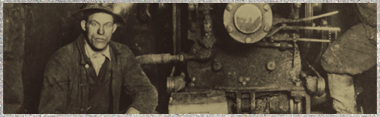
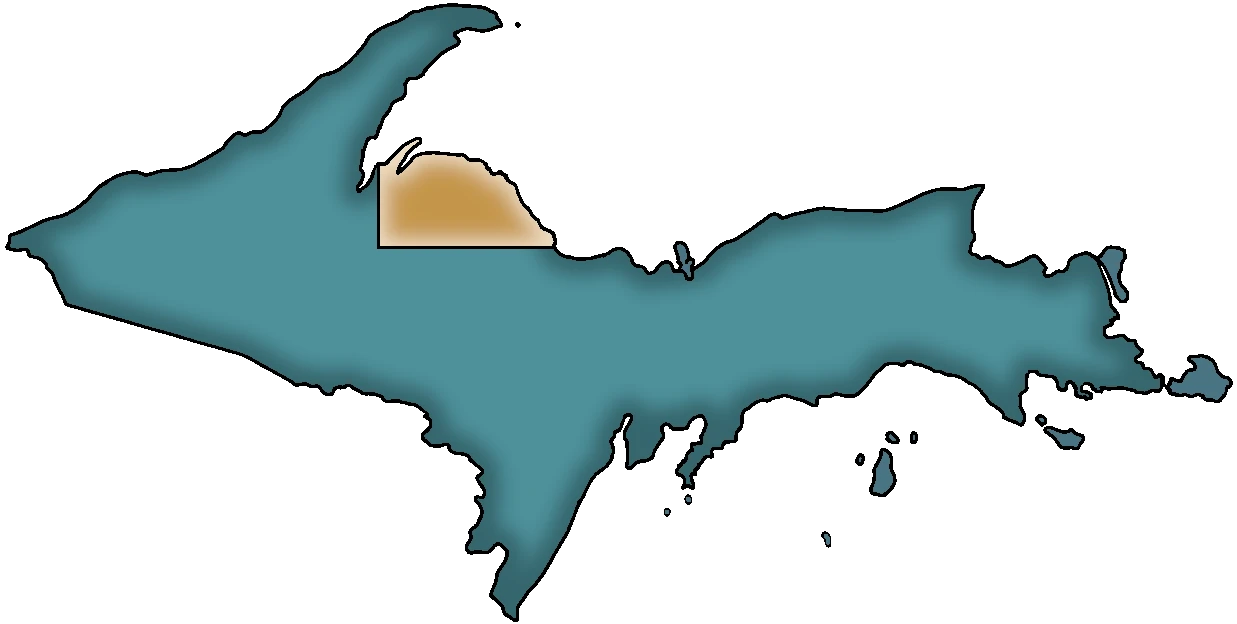
Listen: Barnes and Hecker Disaster Conversation
Note: The transcript for this oral history recoding is below the audio player on this page.
Barnes and Hecker Disaster Conversation Transcript
00:00
SPEAKER A: Testing. Go ahead. Keep talking. We'll try a normal conversation. Keep talking to me right now. Do you have the camera set?
SPEAKER B: Yeah, almost. Yeah. Can we take a vertical picture?
A: Yeah, take a vertical, because I don't know if we can use that but if we can use that, then we'll have that to fade into...
B: Bookshelf?
A: No, his wedding picture. Is that your parents’ wedding picture?
SPEAKER C: Yeah. No. Yeah, up on the top, that's my mother and dad. And this is our 50th wedding picture.
A: Mm-hm. And this is the man who was…
C: That's my father. That's him. That's the man who was killed in the Barnes-Hecker. I remember very well. In fact, I'll never forget it, the day of the disaster. My sister and I were attending school at the Greenwood School, and about one o'clock that day, a neighbor, a Mrs. Valente [phonetic spelling], came in and told our teacher Andrea Johnson [phonetic spelling] that there was a bad... Something had happened at the Barnes-Hecker. She wasn't quite sure what it was, so the teacher dismissed us. And my sister and I walked home about a mile, and both of us were rather scared to walk in the house. I guess, at our age, didn't know what…how my mother, if she knew or [pause] if we had to tell her. But fortunately, my two uncles and aunts were there, had already told her what had happened, and they were getting our clothes ready. We went to live then with my grandmother for a couple of months until the shock of the disaster more or less eased up on my mother.
C: We moved to North Lake. The company prepared a house for us. It was painted and fixed up. I remember the backyard was full of fuel. We moved in. The company gave my mother a monthly compensation--or all the widows. I can't remember the amount--and the state duplicated it, and I think that that ran for about six years. Aft--And then six months after the Barnes-Hecker disaster, my mother gave birth to my youngest sister. But I want to mention here that about two weeks after the disaster, all the widows were told to take their children, go down to the penny store, and outfit their kids with clothes for the winter. And that meant shoes, boots, pants, coats, anything they needed. And the Cleveland-Cliff paid the bill. And they also--I remember Mr. [Charles] Stakel would come in periodically, sometimes once a month, in the house to find out how things were going. I think he was very concerned about the families of that disaster.
C: When I reached--when I was 18 years old, I quit school and went to work for the Cleveland-Cliff at North Lake because all--there were several of us young boys. We didn't have--all we had to do was go down the office and tell them we wished to work, that we were 18, and we got jobs, all of us did. There were a lot of us. And I worked for that company until I retired. I worked 43 years for them, and I retired when I was…just shortly before I was 62. And I don't know if my wife's dad worked for them. In fact, he was one of the men that went down in the mine shortly after the Barnes-Hecker or the day after the Barnes-Hecker disaster, and he was one of the men that found the seven bodies that they got out of there at the Morris Mine.
C: So really, the disaster, we did not suffer. We had always had plenty of food, heat, fuel. The house was comfortable. And I can't say we suffered over there. I really can't. One year in November, after the disaster--you must understand that there was a large small lake, the result of the cave-in. You see, when the mine caved in, it filled up with water, and you could see the tops of pine trees that had been forty, fifty, sixty feet tall. So they decided that they were going to have a memorial service at that site, but there was so much emotion among some of the people that they did not hold any more memorial services at that site. They thought that was foolish. So every year then, there has been--I don't know if there are any more. I suppose the Catholics had Masses said for their husbands, you see. But they did have a memorial. They did have a memorial service in some of the churches for several years after that for all the Barnes-Hecker widows and their children.
[CUT IN TAPE]
05:41
SPEAKER D: Yeah, it was in November 1926. I was a freshman, freshman in high school. And when I entered the bus, there was whispers amongst the school pupils, you know, that the mine had caved in. I didn't think much of it until I got off the bus and you see the people watching us. I didn't bring (??) me up there. I wondered it must have been something more radical than just a building falling down or something. When I got home, well then, the neighbors were there, the Matt Pelkolas [phonetic spelling] and Ned (??) Palomakis [phonetic spelling], and they were trying to comfort my mother. And I knew that it was something radically wrong. The mine had gone down. They tried to comfort us as best they could, but it was quite a shock. It was ironical, you know, and it was tough to think of it. My dad worked in that mine, helped to sink that shaft. And about 20 years later, he got a job there again, and he got left in the mine. In other words, he dug his own grave.
D: Yeah, it was a--must have been about, oh, a month later that we had a congregational burial at the mine at the cave-in site. Not at the mine, but the cave-in site, which was about a quarter of a mile away from the shaft. And at that time, I always wondered--you know, I was two weeks out of school--and I was wondering how was it that that cave-in--I mean, no one survived. When we went past the shaft, there was a rock the size of a kitchen stove that had come from underground and blown right up through the shaft on surface, so this pressured air was terrific. But anyway, we had this burial at the cave-in site, and the companies paid 28 dollars. Now, I don't recall--I believe that was every two weeks, but they doubled that because they didn't get any men out. And this was a very meager payment for what these widowers received.
D: Now, I don't know as far as us getting along any better or worse than any other children around the area because we had--four of our brothers were old enough to work out there, and we worked in different areas, mines and so on, so it wasn't as if that we were in need of anything at any time. Now--this I don't think this was a company agreement, but I think it was a superintendent's own agreement with the survivors of the Barnes-Hecker Mine--is that he promised us work when we got of age in any of their facilities. And I know I got a job there, and even…even my sister's husband got a job there. But as far as being afraid to go underground because my dad got (??) it (??), it never entered my mind because after you start in the mines for a while and you work in them, it just seems as if it's a disease. You feel as if you can't make a living anywhere else. Of course, around this area it’s… [laughs] It's pretty hard to make a living anywhere else, if you're not connected with the mines.
[CUT IN TAPE]
10:55
SPEAKER E: Right now?
A: Mm-hm.
E: My mother was a sister who all of her brothers were involved in the Barnes-Hecker mine disaster. She also had a half-brother who was Rutherford Wills who was the sole survivor who climbed out of the mine that day. My mother's father died when she was just a little girl, and she was the second from the youngest of the Tippett family. And her mother remarried John T. Wills, and he had one son, Rutherford Wills, and he was the sole survivor of the Barnes-Hecker mine disaster. That would be my mother's half-brother.
E: On this day, on November 2, 1926, a neighbor came over to my mother's house and asked her if she wanted to go to the Barnes-Hecker location, and she couldn't understand why he was asking her to go there. She replied she couldn't go because she had a young child who was ill, and she couldn't leave home at this time. But he kept on asking her that, you know, that she should go up there, and he finally told her that your mother needs you, you better go up there. So when she went up there, that's when she found out about the disaster.
E: Her older brother, Bill, was trapped in the mine at this time, and her younger brother, Walter, who put his first shift in the mine that day, he was also trapped in the mine at this time. Her other brother, Albert, he just came to surface just prior to the disaster, and her other brother, which was a half-brother, climbed to the surface and was the sole survivor of the mine disaster.
E: My Uncle Rutherford, the sole survivor, he told me the story of what happened to him that day. He was on the second level of the Barnes-Hecker Mine as a motorman on an underground train. He and his partner, Jack Hanna, had just dumped a load of ore in a pocket out shaft, and they were on their way back into the train about 200 feet in from shaft, and there was a terrific rush of air that they felt that blew the carbide lamp light out in their hat. They also at the same time could hear a terrible thundering noise down in the mine. The lights then flickered, and dimmed, and went out, and they were in total darkness. And he told his partner that something was happening, for something like that to happen in the mine to have such a terrific wind. They knew that when there's a blast underground in a mine, you do get a little concussion of wind, but nothing like this has ever happened before. They knew something terrible was happening, so they proceeded to go ashaft. My uncle, Rutherford, he had worked in the mine a lot longer than his partner, Jack Hanna, and he knew the outlay of the line (??) pretty well. So he told Jack Hanna to hold on to his jacket tail, and they ran out to shaft and feeling their way by kicking the rail with their boots. And when they got out to shaft, Joe Mankee, the skip tender on the third level—on the second level—Now, Joe Mankee was my uncle's best man at his wedding. It just took place two months before that. So, he notified his friend Joe Mankee to climb with them.
E: When my mother was in the Barnes-Hecker location during the day of the disaster, and when she learned that she lost her two brothers, she asked her mother, “All the people are going along as if nothing happened. Everything just going on as it always does go on during the day.” And her mother told her, "My dear, the whole world can't stop because of our sorrow."
E: Well, after the disaster, my Uncle Rutherford was interviewed by many newspapers of what happened that day. And that is one of the reasons why he left the area, because so many people asked him what happened that day. They wanted him to tell the story of his climb out of the mine that day, so he moved out of the area and moved down to Flint, Michigan. And he made a lot of trips up this way. And (??) I (??) was (??) here (??) before he passed away. He’d come up here hunting and fishing and visiting. I mean, he never did like to reminisce about that too much until the later years when he had other interviews by newspapers.
E: On August 27, 1972, the Ely Township Centennial Committee had purchased a memorial with all the men's names on it, and they dedicated it on this day, and my uncle was invited up for that dedication. And he stayed at my home when he came up that day, and he took me--he wanted to take a ride up to the Barnes-Hecker Mine. And on the way there, he told me the story and his own words of what happened that day when he climbed out of that mine, and we also went over and looked at the memorial that morning. And then that afternoon, the dedication took place. We went up there along with my mother and my aunt, Mrs. Bill Tippett, and my other aunt, Mrs. Walter Tippett.
E: Some of the dignitaries who were there was Dominic Jacobetti, the state representative, who gave a talk, and Charles Stakel, who was the general manager of mines at the time of the Barnes-Hecker mining disaster, was there. He gave a little talk. My uncle took part in placing a wreath of flowers on the memorial that day. My uncle didn't have too much to say, all that they were great men, both the great men that he worked with there. You know, they were great people. He knew most all of them.
[CUT IN TAPE]
18:41
SPEAKER F: I was thirteen months old, and I lived in Barnes-Hecker location. Five children in the family, three boys and two girls and a mother. And the news came to my mother--to my brother. He was at the mine delivering lunch at the time when the mine caved in. We lived there for a year and a half. Then we moved to North Lake location, and I lived there all of my young life in North Lake. I was the youngest. My brother John was the oldest. He was fourteen years old, and he wasn't old enough to work, so we lived on the compensation that we got from the company and the federal government. Compensation was four thousand dollars from the company and then four thousand dollars from the federal government. It was classified as a disaster, so it paid double comp, allotted out so much per week according to the size of your family.
F: The company promised my mother that all the boys would get a job when they become age to work, and I worked in the mine forty years. And I went--I worked underground twenty-three years. I never had no fear when I went to work there. I believed the mine too close to surface and not leaving enough dirt above the stopes that they pulled out of--pulled the dirt out of. Water was on top of the back of the stopes that they pulled, and all this water came down and flooded the mine and drowned all the men. Oh yeah, there was people. My dad, he had mentioned it a few times that there was a lot of surface sand and surface boulders coming into the stopes and they had to block the raises with straw and hay to try to stop the run of surface loam dirt, but they never succeeded and then caved in and drowned everybody.
F: They had a memorial that--Ely Township made a memorial and placed it up there by the Evergreen Riding (??) Theater. I think that was 1972. We were up to that dedication. Ely Township had a centennial that year, and the money they got from--left over from the centennial and then some of the citizens there donated the rest and the company donated some, and they made a monument with all the names of the people that were killed, and we were at that there. I worked 39 years, 7 months probably open pitted, open pitted in the later years because there was lots of ore there. The mine was hard to even touch at all. We didn't mine there for many years. Lots of ore there.
[CUT IN TAPE]
22:05
SPEAKER G: The teacher came to tell... The teacher came and told us that we could go home. She didn't tell us why. She just said that we could go home. So we grabbed our hats and coats and went home. And when we got near the house, there was several cars in front and people going in. And when we got in the house, there was all kinds of people, and they were waiting to hear from the mine if they got any of the men out alive. At that time, they still didn't know if the men were trapped in the mine or anything about being killed yet. And then around about 4 o'clock, they notified them that they had got some of the bodies out through the North Lake Mine.
G: The funeral was held two days later at Bethel Lutheran Church, but the body was at our home, and a lot of people came there, friends and strangers, neighbors, and they brought gifts for our children and food. And then on the day of the funeral, the Pathé News camera people and other people were taking pictures, and they came out of the house, and they took some more pictures at the church. And then, they showed it at the Spring Theater. Reverend Eli (??) kept a good sermon and services. And after the funeral, my two cousins from Wakefield, Betty Aho and Simon (??) Ahola (??) [both spelled phonetically], stayed with my mother for about three or four months to help her over her tragedy. The neighbors brought over several presents for our children for Christmas. One of the best Christmas we ever had--the best and the worst, I should say. But we got presents we never ever dreamed of having.
G: And then… [pause] Oh, and then we received word from the company that they would provide my mother with compensation although my dad was not an employee of the company at the time, and--which was very nice. And then, they also provided us with wood. And then a couple summers later, they had garden plots where you could grow potatoes and vegetables and so forth, and we also used to haul wood from the Barnum Mine dump. You could saw it up and burn it.